Arlen Specter
“You’re never too far behind to win, and never too far ahead to lose.”
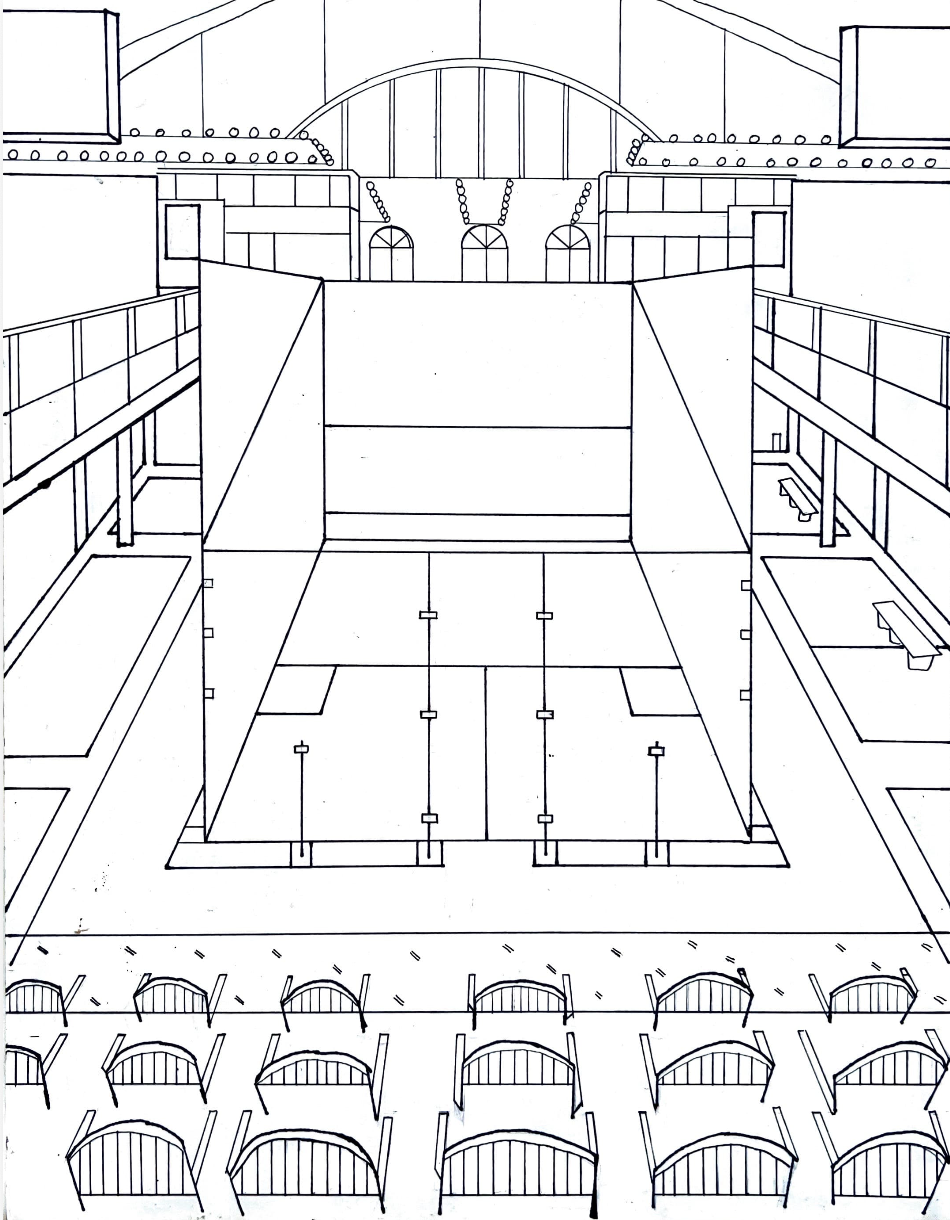
High above the glass center court at the Arlen Specter US Squash Center in Philadelphia hangs a quote that has stayed with me throughout my squash career.
I have competed at this venue countless times, and every time I look up at those words, I am reminded that they apply far beyond squash. They capture a mindset that has shaped the way I think about investing—and life.
No lead guarantees victory. No setback guarantees defeat.
Over time, I have learned that success is determined less by where you stand than by how you respond—remaining humble when things are going well and resilient when they are not.
The Score Is Never the Final Outcome
In squash, a player can control a match from the opening rally. He finds his rhythm, dominates the center of the court, and forces his opponent into uncomfortable positions. The scoreboard may read 9–3, and everyone watching may assume the game is already decided.
But experienced players know a lead is not the same as victory. A few unforced errors, a lapse in concentration, or growing overconfidence can quickly shift momentum.
I have experienced this many times. The score may suggest control, but momentum is always fragile.
The reverse is equally true: a player who falls behind is never truly out of the match. By staying patient, reducing mistakes, and waiting for opportunities, he can slowly change the direction of the game.
Squash has taught me that consistency, adaptability, and mental resilience often matter as much as natural ability.
The financial markets repeatedly teach us two important lessons: success can create false confidence, and setbacks can create unnecessary fear and bad decisions. The history of investing over the past fifty years provides countless examples of both.
When Success Becomes a Weakness
One of the hardest lessons to learn in investing is that being right for a period of time does not mean you will always be right.
Success creates confidence. But confidence without humility can become overconfidence.
During strong markets, investors often begin to believe that their success is the result of superior insight rather than a combination of skill, timing, and favorable conditions. As confidence grows, so does the willingness to take greater risks.
The dot-com bubble of the late 1990s is one of the clearest examples.
The internet was revolutionary, but investors assumed nearly every internet company would succeed. Businesses with ".com" in their names attracted enormous investment despite weak business models and little or no path to profitability.
Between 1995 and early 2000, the Nasdaq Composite Index increased more than 400 percent. Many investors experienced extraordinary gains in a short period of time. Success convinced many that the boom would continue indefinitely.
But markets eventually exposed the difference between a great idea and a great investment.

Beginning in March 2000, technology stocks collapsed. The Nasdaq ultimately lost approximately 78 percent of its value, and many companies that had once been valued at billions of dollars disappeared entirely.
The lesson reminds me of a squash player who builds a 9–2 lead and begins changing the way he plays. Instead of relying on the disciplined strategy that created the advantage, he attempts unnecessary winners and takes shortcuts. He stops playing the game that made him successful.
The score gives them confidence, but it also creates complacency.
The internet was not the problem. The mistake was assuming that a revolutionary idea guaranteed successful investments. Even the strongest positions require discipline and humility.
Being ahead is valuable—but protecting that advantage requires humility.
Staying Patient When You Are Behind
If overconfidence is one danger in investing, fear is another.
Some of the greatest investment opportunities appear when almost everyone else believes the future looks grim.
The global financial crisis of 2008 was one of those moments.
The collapse of the U.S. housing market triggered a worldwide financial crisis. Major institutions failed or faced collapse. Credit markets froze. Businesses struggled. Unemployment rose sharply. Many investors believed the damage would continue for years.
Fear overwhelmed fundamentals.
Yet some investors saw opportunity in the panic.

Warren Buffett was among the investors who saw opportunity, investing billions in companies such as Goldman Sachs and General Electric because he believed strong businesses would recover once the panic subsided. His decisions were based not on predicting the immediate future, but on recognizing that fear had pushed prices below the long-term value of quality companies.
The recovery reinforced a lesson investors have learned repeatedly: patience is often rewarded.
Although uncertainty persisted, the years that followed produced one of the strongest market recoveries in modern history. Investors who stayed disciplined benefited from the recovery, while those who sold during the panic were often permanently locked in losses.
Squash teaches the same lesson.

When a player is behind, say 3–8, the natural instinct is to force the game with a spectacular shot. But experienced players know that desperation usually leads to more mistakes.
The better approach is patience. Extend the rallies, move well, and make the opponent earn every point.
Slowly, momentum shifts. The pressure of protecting the lead produces unforced errors, and the player who seemed destined to lose suddenly has a path back.
Investing, like squash, rewards composure under pressure. Being behind is often temporary—it is not the final result.
The Final Rally
The quote above the court at Arlen Specter has become more than a reminder about competition—it has become a philosophy.
Investing has taught me that success requires the same qualities as squash: discipline in good times, patience in difficult ones, and the ability to focus on the next point rather than the current score.

The best investors are not those who are always ahead, but those who understand that every market, like every match, contains moments of uncertainty and change. What matters most is how you respond when momentum shifts. Staying humble in times of success and patient during setbacks allows sound decisions to compound over time.
A large lead can disappear. A difficult deficit can become a comeback. The score only matters when the match is over. Until then, the opportunity to respond, adapt, and improve is always there. The only requirement is to stay engaged, continue learning, and keep competing until the final rally—because in both investing and squash, the outcome is never determined until the match is over.
